Introduction
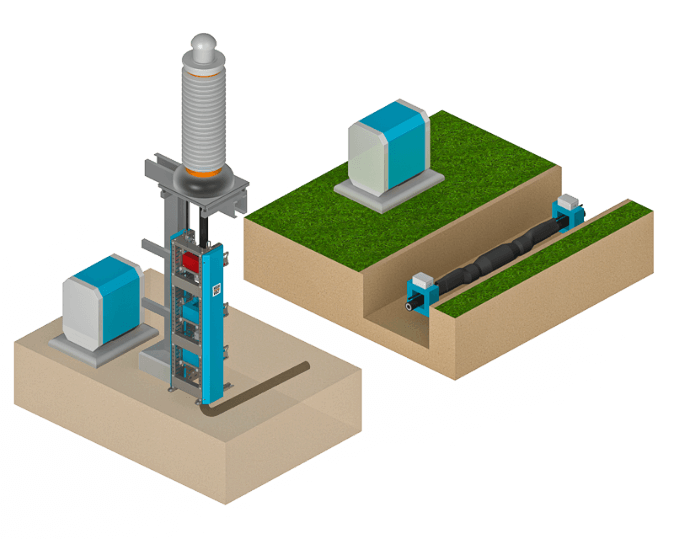
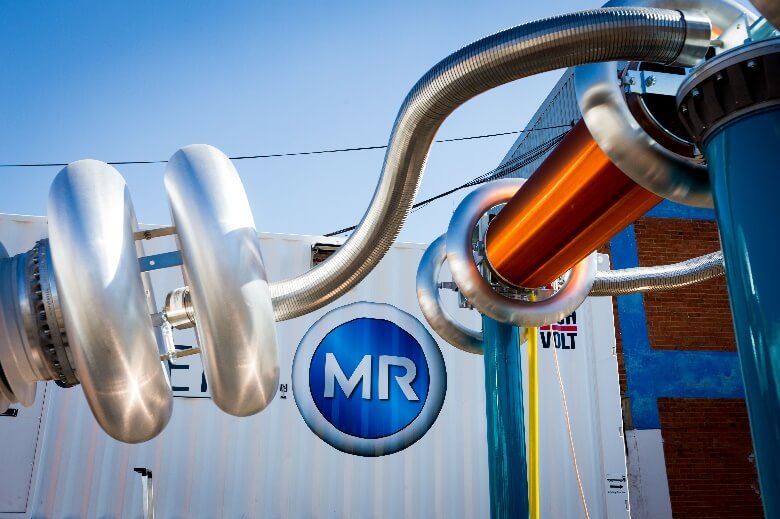
We provide specialised on-site HVDC testing services for high-voltage cable systems and associated infrastructure.
With our 800 kV HVDC test system, we perform on-site high-voltage DC tests for:
- HVDC cables up to 525kV and
- HVDC Gas Insulated Switchgears
Our experienced specialists have successfully completed more than 190 on-site high-voltage tests.
Our specialists and test systems have supported high-voltage projects across multiple regions and operating environments worldwide.
HVDC Cables Testing
Testing standards are defined in IEC 62895:2017 which recommends a DC withstand test at 1,45 U0 at negative polarity for 60 minutes.
CIGRE Study Committee B1 recommends in Brochure CIGRE WG B1.32 Technical Brochure 496, “Recommendations for Testing DC Extruded Cable Systems for Power Transmission at a Rated Voltage up to 500 kV,” an on-site AC test prior to the DC withstand test to reliably identify assembly failures by means of partial discharge measurement.
In 2019, the German Standardization Organization VDE DKE referenced IEC 62895:2017 and expanded it with the technical recommendations from CIGRE TB 496, publishing the result as DIN IEC 62895:2019.
German TSOs and cable manufacturers have adopted an AC resonant test at a reduced test voltage of 0.5 to 0.8 U₀ for 60 minutes. The AC test is intended to reliably initiate detectable partial discharge activity associated with assembly defects in cable accessories.
Partial Discharge Measurement
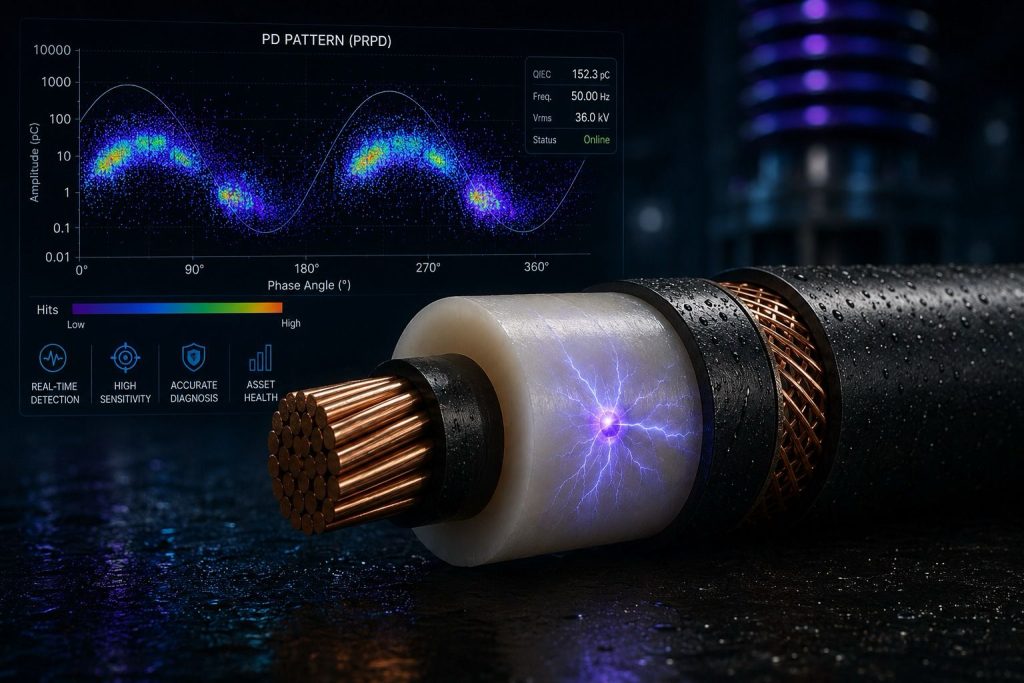
There are no standards defining Partial Discharge measurement procedures during DC tests. Nevertheless PD indication is sometimes used as early indicator before a potential breakdown.
Current industry practice therefore favours an AC test prior to the DC withstand test to enable meaningful partial discharge assessment of the cable system.
We provide HVDC withstand testing, complementary AC testing and partial discharge measurement in accordance with the project-specific testing philosophy and customer requirements.
HVDC Land Cables
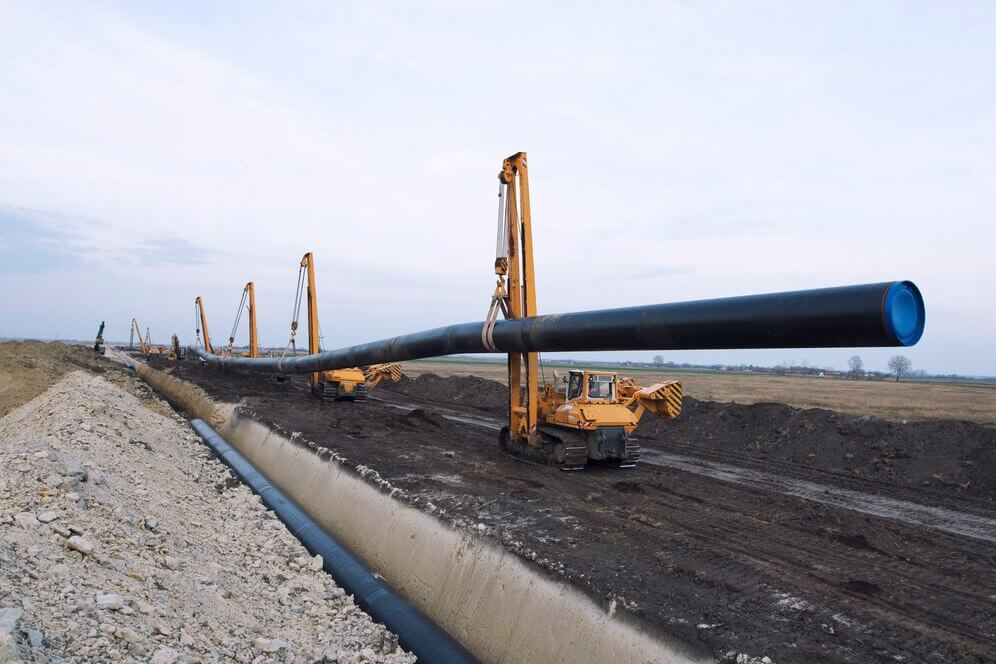
HVDC land connections enable the transmission of large amounts of electrical energy over long distances. Underground cable systems typically require joints approximately every 800 to 1,200 metres. As these joints are generally accessible, conventional partial discharge measurements can be performed at individual joint bays during HVDC testing, subject to the limitations described above.
However, a 100 km land connection may include approximately 130 joints, making individual measurements at every joint bay labour-intensive and time-consuming. The large number of joints also increases the importance of effective monitoring and early defect detection. A more efficient alternative is the HiMON online PD monitoring system, which provides continuous monitoring and supports the early identification of insulation defects across long cable links. Typically, only one monitoring sensor is required approximately every 12 km rather than at every joint bay.
Subsea Cables
For subsea cables, partial discharge measurements can generally be performed only at the end terminations. Measurements at both the near-end and far-end terminations are therefore recommended. It is recommended to conduct PD measurements on both the near and far end terminations. The jointing process for the underwater joints differs significantly from that of land cables and is ultimately more reliable. As a result, the absence of PD testing at every joint location is generally considered acceptable.
Given the extended lengths of subsea cables, it is crucial to consider the sheath return current during HVAC testing (if applicable), as it may exceed the permissible limits. In such cases, the sheaths or conductors of other phases, or even the metallic return, can serve as parallel return paths to mitigate the issue.
For very long cable systems, applicable standards allow the AC resonance test frequency to be reduced to as low as 10 Hz, helping to reduce the required testing power and associated return current.
HIGHVOLT HiMON System
HiMON is a comprehensive cable-monitoring system designed to support commissioning tests, continuous partial discharge monitoring and online fault localisation.
- Online Partial Discharge Measurement and Commissioning Tests:
HiMON functions as an advanced online partial discharge (PD) monitoring system, capable of detecting insulation defects in real-time. Additionally, it can be used during the commissioning high-voltage (HV) test to perform precise PD measurements. Only one sensor per 12km cable length is needed. - Online Fault Localization for Long Subsea Cables:
HiMON provides online fault localisation for long subsea cable systems. In the event of a cable failure, the fault location can be identified promptly. HiMON has been successfully applied to subsea cable systems extending several hundred kilometres using only two sensors, positioned at the near and far ends. The localisation accuracy is 0.4% of the cable length. - Monitoring the Metallic Return of HVDC Lines:
HiMON provides real-time monitoring of the metallic return in HVDC systems, allowing damage to this critical component to be detected promptly. Continuous monitoring helps verify that the metallic return remains available to support system operation in the event of a pole-cable failure.
With HiMON, you benefit from enhanced diagnostics, reliable fault detection, and continuous system health monitoring.